Not-for-profit audit committee guidebook
Your organization’s most valuable asset is its reputation, and that reputation must be able to withstand today’s increase scrutiny. As an audit committee member, you are a guardian of that precious asset.
23 Jun 2026 2 min read

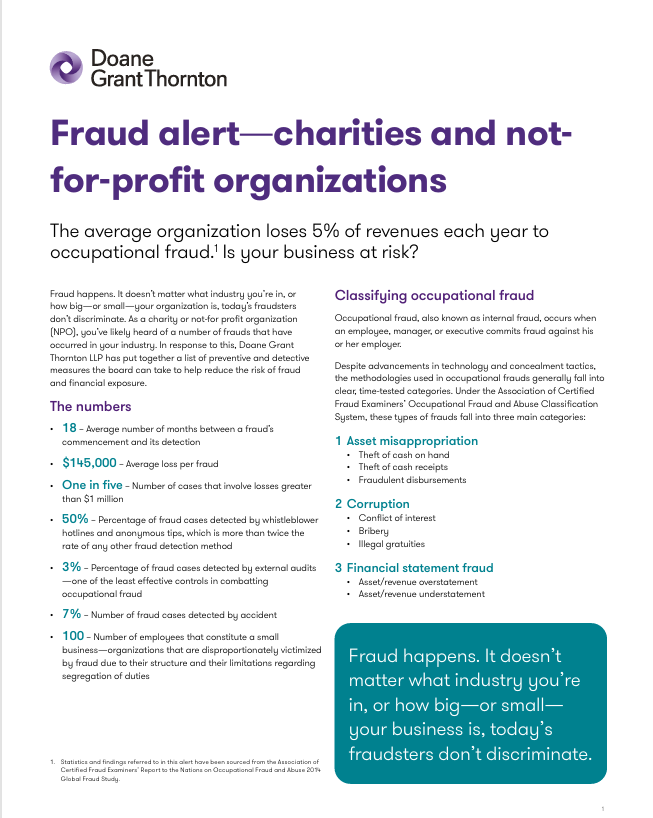
Fraud happens. It doesn’t matter what industry you’re in or how big—or small—your organization is, today’s fraudsters don’t discriminate. As a charity or not-for-profit organization (NPO), you’ve likely heard of a number of frauds that have occurred in your industry. In response to this, Doane Grant Thornton LLP has put together a list of preventive and detective measures your board can take to help reduce the risk of fraud and financial exposure.
Occupational fraud, also known as internal fraud, occurs when an employee, manager or executive commits fraud against his or her employer.
Despite advancements in technology and concealment tactics, the methodologies used in occupational frauds generally fall into clear, time-tested categories. Under the Association of Certified Fraud Examiners’ Occupational Fraud and Abuse Classification System these types of frauds fall into three main categories:
An important component of fraud prevention and early detection is learning how to spot the red flags. While they take a variety of forms, the following is a list of common red flags:




Your organization’s most valuable asset is its reputation, and that reputation must be able to withstand today’s increase scrutiny. As an audit committee member, you are a guardian of that precious asset.

The Accounting Standards Board issued an Exposure Draft proposing changes to the Accounting Standards for Not-for-Profit Organizations.

This publication summarizes the 2019 amendments for upfront fees and considerations for entities in light of the AcSB’s decision to defer the effective date.