Insights into IFRS 15 – Determining the transaction price
Learn how to determine the transaction price under Step 3 of IFRS 15's five-step revenue recognition model, including key considerations for customer contracts and financial reporting.
10 Nov 2021 1 min read
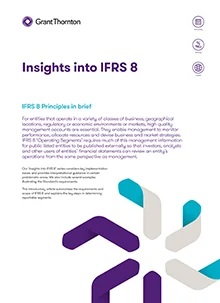
For entities that operate in a variety of classes of business, geographical locations, regulatory or economic environments or markets, high quality management accounts are essential. They enable management to monitor performance, allocate resources and devise business and market strategies. IFRS 8 ‘Operating Segments’ requires much of this management information for public listed entities to be published externally so that investors, analysts and other users of entities’ financial statements can review an entity’s operations from the same perspective as management.
Our ‘Insights into IFRS 8’ series considers key implementation issues and provides interpretational guidance in certain problematic areas. We also include several examples illustrating the Standard’s requirements.
This introductory article summarises the requirements and scope of IFRS 8 and explains the key steps in determining reportable segments.
Learn how to determine the transaction price under Step 3 of IFRS 15's five-step revenue recognition model, including key considerations for customer contracts and financial reporting.
Share-based payments have become increasingly popular over the years, with many entities using equity instruments or cash and other assets based on the value of equity instruments as a form of payment to directors, senior management, employees, and other suppliers of goods and services.
Share-based payment transactions with non-employees involve compensating parties other than employees, such as suppliers of goods and services.
Get the latest insights in your inbox.
Subscribe to receive relevant and timely insights and event invitations.