Insights into IFRS 15 – Determining the transaction price
Learn how to determine the transaction price under Step 3 of IFRS 15's five-step revenue recognition model, including key considerations for customer contracts and financial reporting.
01 Dec 2013 1 min read
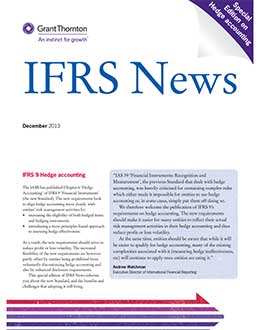
The IASB has published Chapter 6 ‘Hedge Accounting’ of IFRS 9 ‘Financial Instruments’ (the new Standard). The new requirements look to align hedge accounting more closely with entities’ risk management activities by:
As a result, the new requirements should serve to reduce profit or loss volatility. The increased flexibility of the new requirements are however partly offset by entities being prohibited from voluntarily discontinuing hedge accounting and also by enhanced disclosure requirements.
This special edition of IFRS News informs you about the new Standard, and the benefits and challenges that adopting it will bring.
Learn how to determine the transaction price under Step 3 of IFRS 15's five-step revenue recognition model, including key considerations for customer contracts and financial reporting.
Share-based payments have become increasingly popular over the years, with many entities using equity instruments or cash and other assets based on the value of equity instruments as a form of payment to directors, senior management, employees, and other suppliers of goods and services.
Share-based payment transactions with non-employees involve compensating parties other than employees, such as suppliers of goods and services.
Get the latest information in your inbox.
Subscribe to receive relevant and timely information and event invitations.